Where the line is drawn
Ausgrid's responsibility ends at the point of supply, which is usually the connection on the street pole or the pit at your boundary. Everything from there to your switchboard is the consumer's installation. If that run includes a pole in your yard or along your driveway, that pole is private.
Acreage blocks, battle-axe lots, rural properties around Kariong, Somersby and the Yarramalong Valley, and older homes set well back from the road are the usual owners of private poles. Many people do not realise they have one until a notice appears.
What ownership means in practice
- Inspection. Ausgrid expects owners to check private poles at least once a year, and after major storms. Look for rot at the base, cracking, leaning, rusted brackets and branches on the line.
- Vegetation. Keeping trees clear of a private line is the owner's job, not Ausgrid's.
- Defect notices. If an Ausgrid inspector sees a problem, the notice comes to you and the clock starts.
- Insurance. Some home policies exclude private poles and lines. Worth a phone call to check before you need it.
- Selling. A pole in poor condition is the kind of thing a building inspector flags and a buyer negotiates on.
How long poles last
A treated hardwood pole typically lasts 25 to 40 years. Steel poles last longer and are the sensible choice in bushfire-prone or termite-prone areas. Coastal salt air and wet ground shorten the life of both. If you do not know when your pole went in, assume it is due for a look.
Signs it needs attention now
- You can push a screwdriver into the base
- It leans noticeably, or has moved after a storm
- There is a split running up the pole
- The crossarm or bracket at the top is rusted through
- Woodpecker-style holes or termite galleries
- The service line sags lower than it used to
What replacement costs
On the Central Coast a like-for-like hardwood pole replacement starts from about $2,800. Steel starts from about $3,800. A brand new pole on a block that never had one, with a longer cable run, starts from about $4,500. The main cost drivers are pole height, ground conditions (rock is slower), whether the service line also needs renewing, and access for the pole truck. More detail on the pole replacement page.
The process
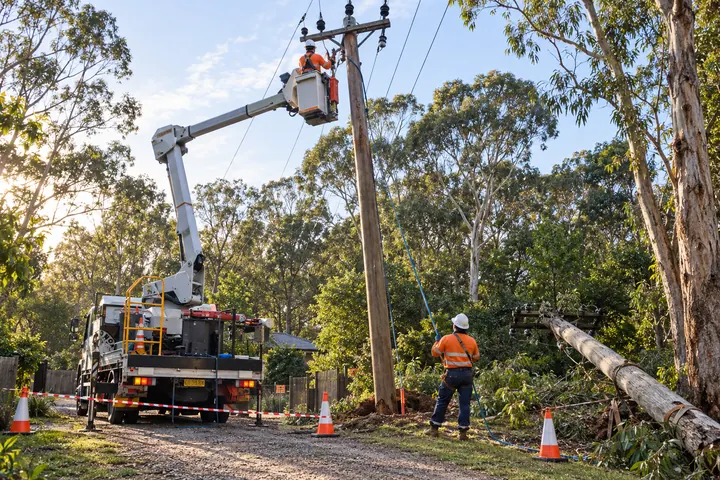
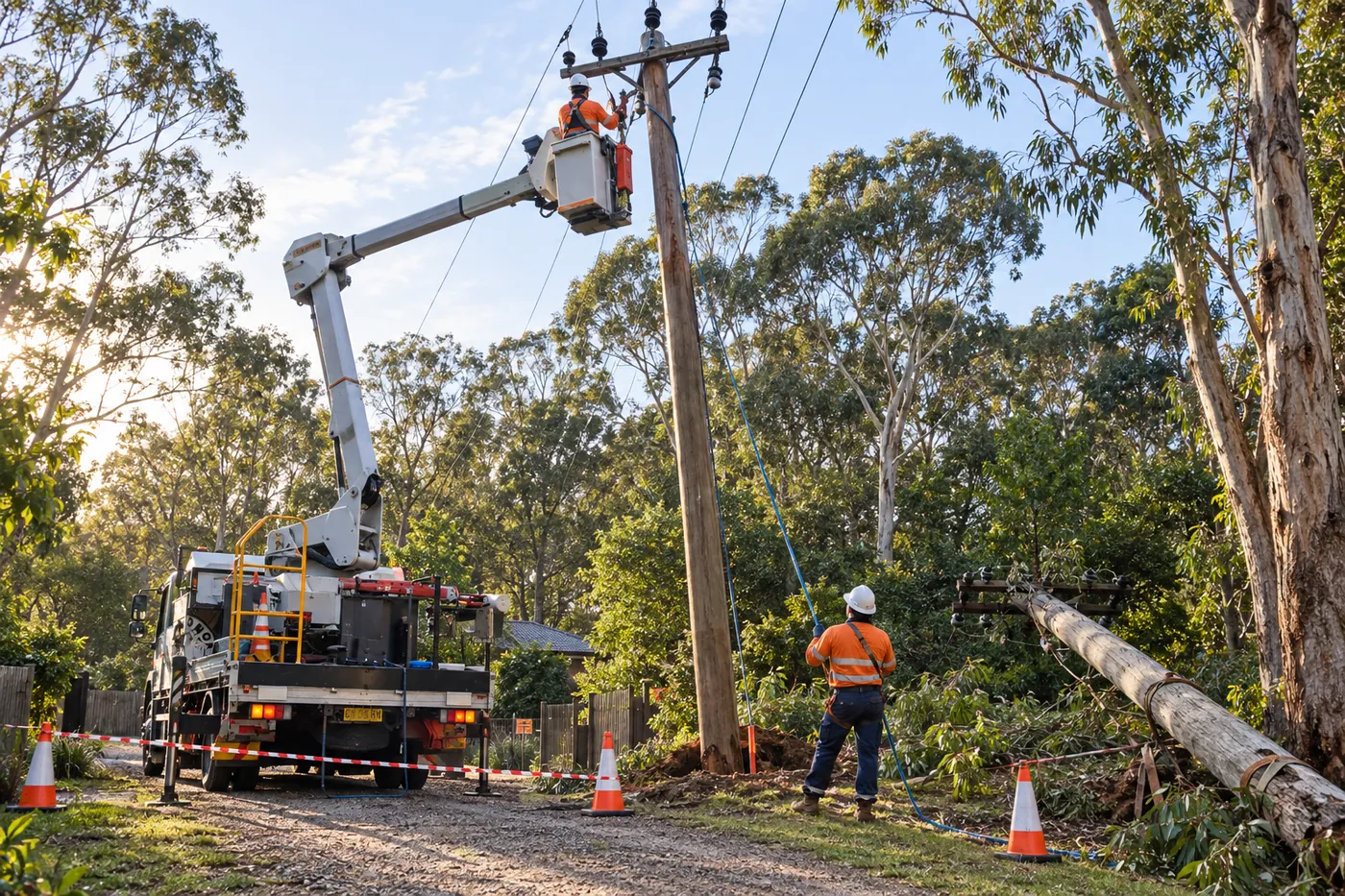
A pole replacement is normally a single day on site. We lodge the notification with Ausgrid beforehand, arrange a short planned outage, stand the new pole, transfer or renew the line, test, and have the supply energised. You get a CCEW within a day of completion.