What the two options actually are
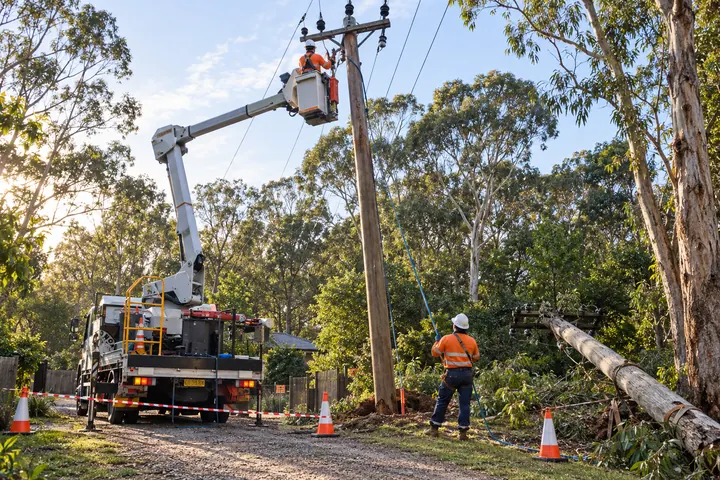
Overhead: a bundled cable runs from Ausgrid's street pole, sometimes via a private pole, to a bracket on your house called the point of attachment, then down the wall to the meter and switchboard.
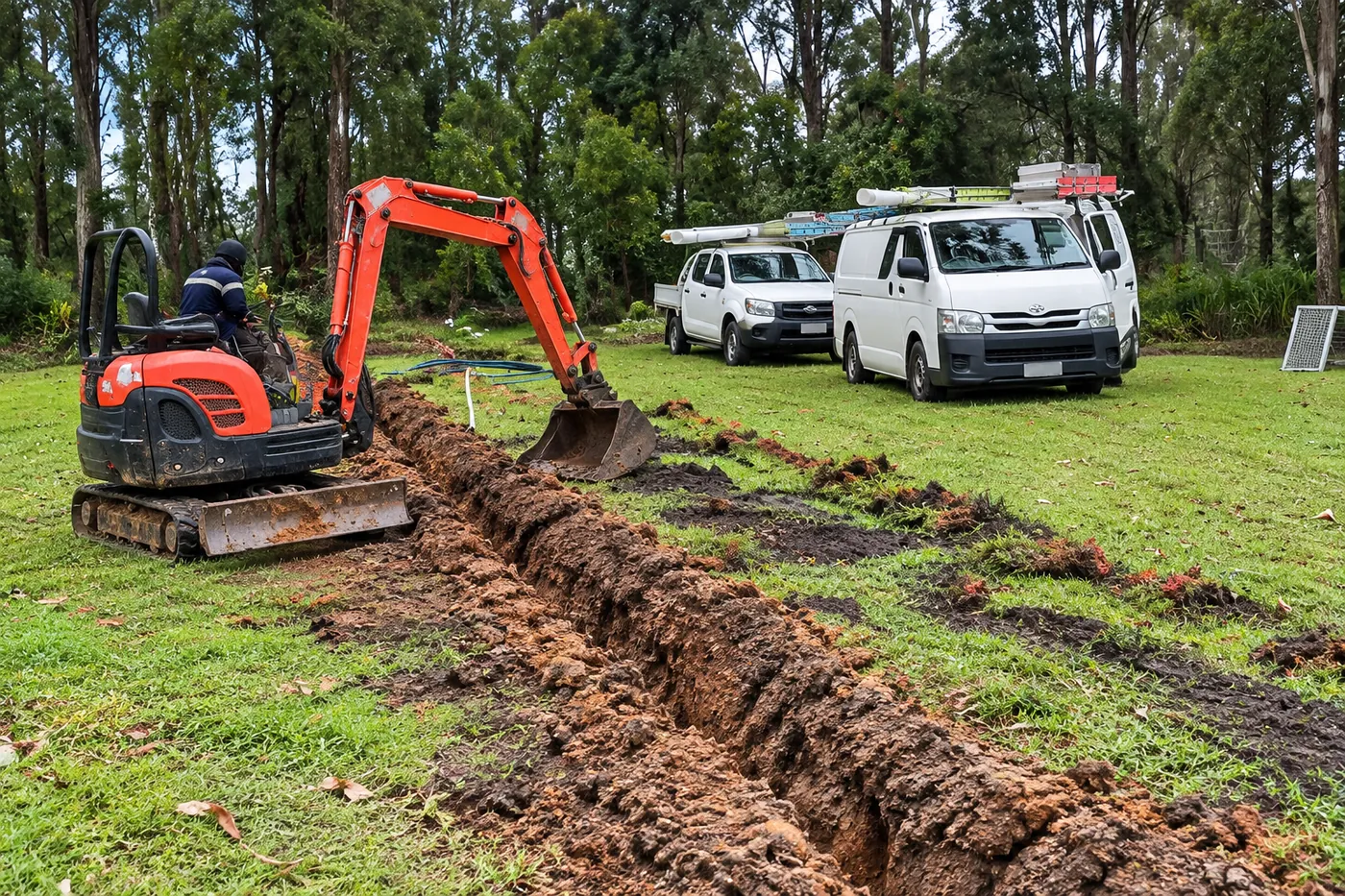
Underground (UD): a cable runs from Ausgrid's pit or pillar at your boundary, through a trench, to your switchboard. Nothing is visible once the trench is closed.
Side by side
| Overhead | Underground | |
|---|---|---|
| Typical cost (Central Coast) | From about $1,800 | From about $3,200, more with rock or driveway cuts |
| Time on site | Half a day to a day | Two to three days including trench and reinstatement |
| Storm and tree risk | Exposed | None |
| Look | Visible cable and pole | Invisible |
| Maintenance | Periodic re-tensioning, bracket renewal, vegetation | Almost none |
| Future changes | Easy to modify | Fault-finding and changes mean digging |
| Fits a new estate? | Usually not permitted | Standard |
When underground is the better call
- You are building on a UD-serviced estate. There is no choice.
- Big established trees between the street and the house. Every storm is a risk to an overhead line.
- You are re-doing the driveway or landscaping anyway, so the trench costs little extra.
- A heritage or architecturally designed home where a pole and cable would be an eyesore.
- Coastal exposure. Salt corrodes overhead fittings faster; buried cable does not care.
When overhead makes more sense
- The existing pole and point of attachment are sound and you just need bigger mains.
- There is rock between the street and the house. Trenching through sandstone is slow and expensive.
- Budget matters and the run is short and clear of trees.
- You want it done this week.
Things people forget about underground
The trench has to meet the depth and bedding rules in AS/NZS 3000, which means sand bedding, warning tape and proper backfill. If it crosses a concrete driveway, that means a saw cut and a patch. Other services (water, gas, telecoms) have to be located first. None of this is difficult, but it is why the quote is higher. Full detail on the underground power page.
Converting from overhead to underground
Common on the Coast for renovations. Ausgrid needs a connection point at the boundary, which may already exist or may need to be installed. We assess this on the site visit. Sometimes the answer is "yes, easily"; occasionally it is "the street is overhead only and the conversion needs network work that is not worth it".