First: assume every line is live
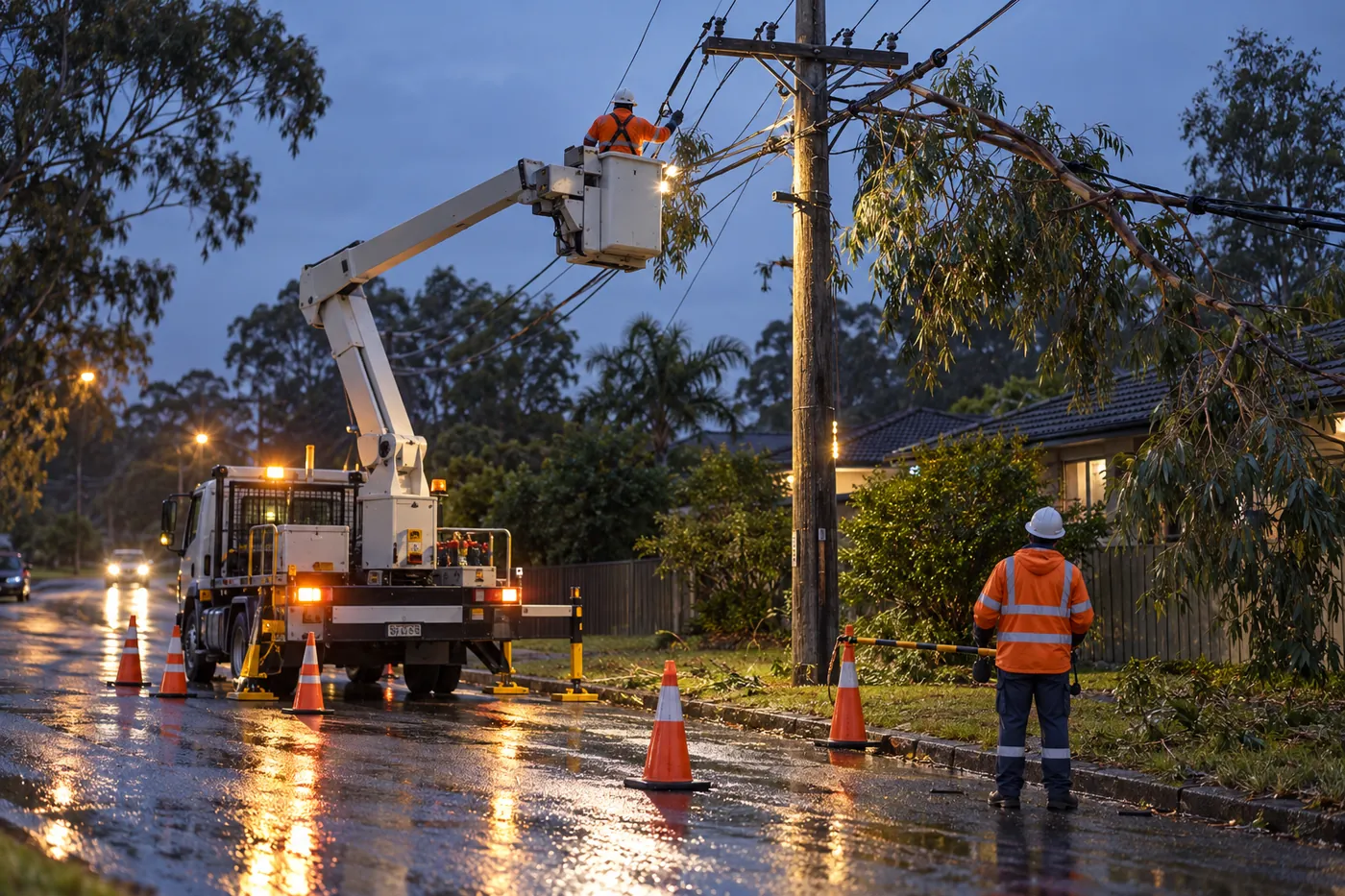
A downed line on wet ground can be lethal without touching it. A line that looks dead may be re-energised remotely. Fences, gutters, wet grass and puddles conduct. Eight metres is the rule of thumb, further if it is raining.
In the first ten minutes
- Get everyone inside or well clear.
- If you smell burning at the meter box or see sparking, and the main switch is safely accessible, turn it off. If you are not sure, leave it.
- Call Ausgrid on 13 13 88 to report a fallen or damaged line. They log it and, if it is network-side, dispatch a crew.
- Photograph the damage from a safe distance. Useful for us and for insurance.
Whose problem is it?
This matters because it decides who fixes it.
| Damage to | Who repairs it |
|---|---|
| Street poles, street lines, the transformer | Ausgrid |
| Your private pole | You, via a Level 2 electrician |
| The service line from the street to your house | You, via a Level 2 electrician |
| The bracket on your house (point of attachment) | You, via a Level 2 electrician |
| Meter box, switchboard | You, via a Level 2 or general electrician depending on the fault |
The quickest tell: if the whole street is out, it is Ausgrid. If it is just your house, it is probably yours.
What a Level 2 does when we arrive
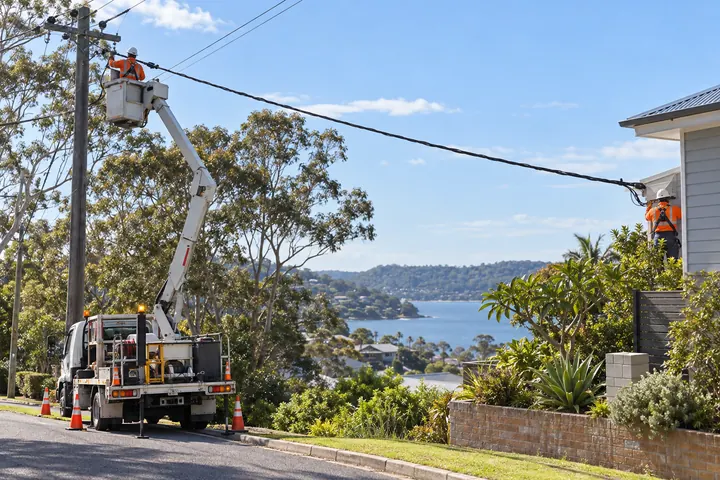
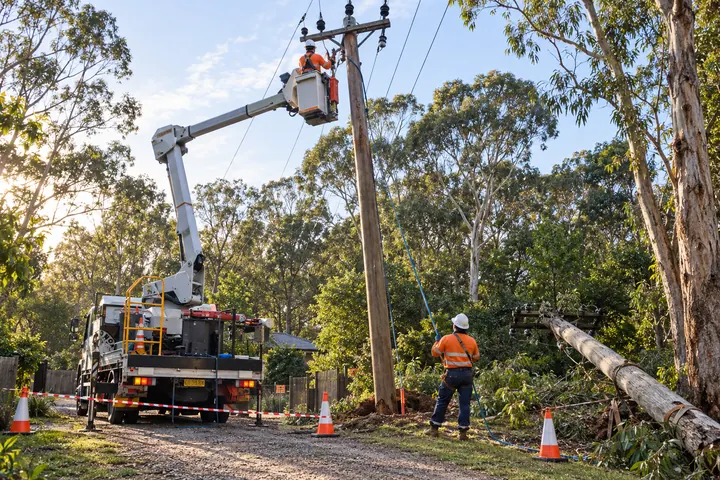
Make safe first: isolate the damaged section so nobody is at risk. Then assess whether it can be repaired now or needs parts. A torn-down service line can usually be re-anchored or replaced the same day. A snapped pole needs a replacement, which we normally do next day with a temporary supply overnight if we can. We then lodge the paperwork and have Ausgrid re-energise. See storm damage and fault-finding.
After-hours attendance
We attend storm damage around the clock, including weekends and public holidays. We make the site safe first, then quote the repair once we can see the damage, so you know the cost before the work starts.
Insurance
Storm damage to private poles and lines is often covered under home insurance, but not always. Keep the photos, keep the invoice, and ask your insurer before the work if you can. If the pole was already defective, some policies will decline.
Reducing the odds next time
Keep trees clear of your line. Have the pole looked at every year. Replace a service line that is visibly old before a storm does it for you. Most of our emergency callouts were avoidable a year earlier.